- The UK's Guide to Food & Drink
- bdpublications@gmail.com


Burtons combines Maryland cookies and Jammie Dodgers for new launch
6 May 2025
City snapshot: AG Barr posts ‘record’ first half profits as out-of-home consumption rebounds
6 May 2025
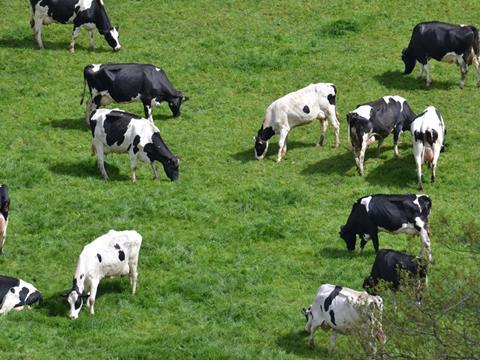
Nestle, Danone, Saputo and Arla Foods are among 40 organisations to declare their support for a new global climate change initiative aimed at reducing greenhouse gas emissions.
So far, 11 of the 20 largest dairy companies in the world – representing 30% of total milk production worldwide – have backed the multi-stakeholder Pathways to Dairy Net Zero initiative, which aims to accelerate climate change action across the dairy sector and “develop science-based methodologies, tools and pathways that work for every dairy system”.
Other organisations to sign up include Dairy UK, the dietary-focused Global Dairy Platform and other scientific bodies, plus the International Dairy Federation and suppliers including First Milk, Glanbia and FrieslandCampina.
Dairymen 2021: how is the dairy industry addressing climate change?
Launched at the UN’s Food Systems Summit in New York last week, the initiative is underpinned by six principles: mitigation, greenhouse gas removal, avoidance and adaptation, insets and offsets, measurement and monitoring and overall support [see box below for more information].
Pathways to Dairy Net Zero, the key principles:
- Mitigation. Continuing to improve production and process efficiency to further reduce the GHG emissions intensity of milk and dairy products.
- Greenhouse gas removals. Enhancing production practices that protect carbon sinks (soil, forests, grass, peatlands) and complement natural ecosystems.
- Avoidance and adaptation. Improving practices such as feed, manure, fertiliser and energy management.
- Insets and offsets. Identify and implement alternative, credible reduction options.
- Measurement and monitoring. Measuring greenhouse gas emissions to plan mitigation and monitor progress.
- Overall support. Promoting the global initiative and emphasising the dairy sector’s climate ambition.
Research to identify where accelerated climate change action is possible is being led by Scotland’s Rural College, the New Zealand Agricultural Greenhouse Gas Research Centre, and the Global Research Alliance on Agricultural Greenhouse Gases, backed by data and analysis from the UN Food and Agriculture Organization.
Previous findings revealed the dairy sector already had the means to reduce a significant proportion of emissions – up to 40% in some systems – by improving productivity and efficiency.
Consumer research: what are shoppers thinking about dairy and the environment?
“Pathways to Dairy Net Zero will accelerate climate efforts already underway and drive further necessary action to reduce dairy’s emissions over the next decades,” said Hein Schumacher, CEO of Royal FrieslandCampina and chairman of Global Dairy Platform. “The dairy sector has a lot to offer to lead this transition.”
The latest Intergovernmental Panel on Climate Change (IPCC) report reaffirmed that the main GHG challenge is the reduction of carbon dioxide, which remains in the atmosphere for centuries.
The report also identified reductions in methane, a potent but short-lived climate pollutant that lasts only about 12 years in the atmosphere, as an immediate opportunity to address global warming.
Progress on the initiative will be shared at the COP26 climate change summit in Glasgow, in November.
Going green: meet the dairy sector’s sustainability heroes